
Shri Vijay Shanti Suriji Maharaj
A dedicated tribute — his life, sadhana and enduring teachings.
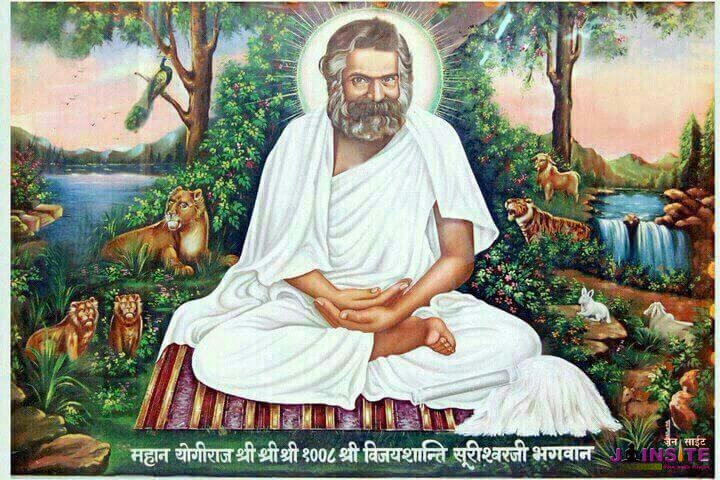
॥ महान् योगीराज श्री विजयशान्ति सूरीश्वरजी भगवान् ॥
Biography — key milestones
Acharya Shri Vijay Shanti Surishwarji Maharaj was a Jain monk and spiritual leader of the Śvetāmbara tradition, widely revered as Yogiraj, Suri Samrat, Jagat Guru, Nepal Rajguru and Yug Pradhaan.
Birth
25 Jan 1890 (V.S. 1946, Basant Panchami)
Village Manadar, Distt Sirohi, Rajasthan
Parents
Sh. Bhimtolaji & Smt. Vasudevi
Caste: Ahir · Birth name: Sagtoji
Diksha
9 Feb 1905 (V.S. 1961, Basant Panchami)
Village Ramsin, Distt Jalore
Guru lineage
Guru: Sh. Teerth Vijayji
Dada Guru: Sh. Dharam Vijayji
Full enlightenment
V.S. 1985 (Aasoj Mah)
Aarna, Mount Abu
Nirvaan
23 Sep 1943 (V.S. 2000, Aasoj Bad Dasam)
Achalgarh, Mount Abu
Agni Sanskar
27 Sep 1943 (V.S. 2000, Aasoj Bad Chaudas)
Village Mandoli Nagar, Distt Jalore
Also renowned as
Anant Jeev Pratipal · Yogender Chudamani
RajRajeshwar · His Holiness
Vision — Shanti Vijay Global Mission
“Spreading the name of Gurudev in all spheres of life.”
Inspired by the Shanti Vijay Global Mission (headquartered at Mandoli), Vishwa Prem Parivar carries forward Gurudev's teachings through dedicated Gurubhakts and mandals across India and abroad — with satsang, seva, sadhana and swadhyay at the centre of every activity.
Sadhana & Practice
His title Yogiraj reflects a reputation for deep meditative attainment and ascetic discipline. Practices upheld by his followers include:
- Daily meditation and Bhavana Yog
- Recitation of Jain prayers, stavan and aarti
- Participation in satsangs and guru bhakti mandals
- Temple visits and Mandoli yatra
- Community seva and observance of ahimsa
Teachings
- Inner peace (Shanti) through meditation
- Jain principles of ahimsa (non-violence)
- Simplicity and ascetic living
- Guru devotion and disciplined spiritual practice
- Self-purification and introspection
- Service (seva) to society
- Preservation of Jain traditions and pilgrimage culture
Sacred places in Gurudev's life
Janam Bhoomi
Manadar, Sirohi
The birthplace of Gurudev — walked by devotees on pilgrimage.
Diksha Sthal
Ramsin, Jalore
Where he took diksha in 1905 on Basant Panchami.
Samadhi Sthal
Achalgarh, Mount Abu
The site of his nirvaan in 1943.
Antim Sanskar Bhoomi
Mandoli Nagar, Jalore
Consecrated ground of his final rites — today's Mandoli Dham.
Legacy & lineage
Organisations carrying forward his mission include the Shanti Vijay Global Mission, various Shanti Gurubhakt Mandals across India, and temple trusts associated with his memory. Important pilgrimage centres include Shri Vijay Shanti Suri Guru Mandir, Mandoli Dham and the sacred sites above.
Followers describe him as a realised saint, meditation master and compassionate guide — an enduring inspiration for seva, sadhana and community building.
Live Darshan
Darshan from Mandoli Dham
A live stream of Gurudev's principal seat at Mandoli is maintained by the Shanti Vijay Global Mission. Join darshan wherever you are.

The essence of his path
“Shanti — inner peace — is not found outside. It is uncovered within, through meditation, ahimsa, and devotion.”
— In the spirit of Yogiraj Shri Vijay Shanti Suriji Maharaj